Understanding Constitution Day Reading: A Comprehensive Guide for Educators and Parents
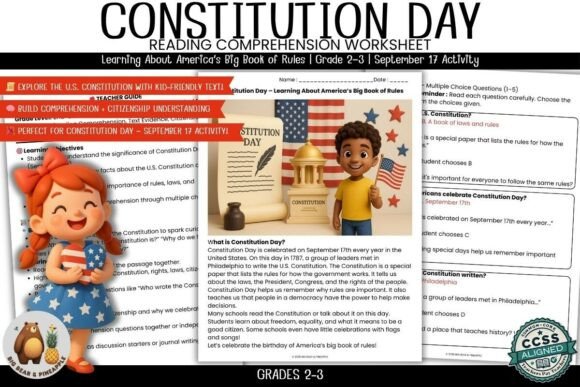
Constitution Day Reading is an educational resource designed to introduce young learners, particularly those in grades 2-3, to the significance of the U.S. Constitution. This resource is especially useful for celebrating Constitution Day on September 17, providing a kid-friendly passage that simplifies complex concepts into accessible language. The material includes a 150-word nonfiction passage, "What is Constitution Day?", along with a mix of multiple choice and open-ended questions to engage students in critical thinking and comprehension.
Key Features of Constitution Day Reading
- A 150-word, easy-to-read passage about Constitution Day
- 5 multiple choice questions to test basic understanding
- 5 open-ended questions with sentence stems to encourage deeper reflection
- A full answer key with text evidence and scoring notes
- A teacher guide with lesson suggestions and SEL (Social and Emotional Learning) prompts
- An engaging 3D cartoon illustration suitable for both printing and digital use
How Constitution Day Reading Stands Out
One of the key strengths of Constitution Day Reading is its simplicity and accessibility. The passage is written in simple, clear language, making it ideal for early elementary students. This resource is not just a reading exercise; it also integrates elements of Social Studies, literacy, and citizenship education, making it a versatile tool for various classroom activities.
Compared to other educational resources, Constitution Day Reading offers a more focused and structured approach. While some materials might provide a broader overview of American history or government, this resource specifically targets the foundational principles of the U.S. Constitution. This makes it particularly useful for educators who need a concise, targeted lesson for Constitution Day.
Best-Fit Situations and Limitations
Constitution Day Reading is best suited for:
- Elementary school teachers looking for a quick, effective way to cover Constitution Day
- Parents who want to introduce their children to the basics of the U.S. Constitution
- Classrooms that need a balanced mix of reading, comprehension, and discussion activities
However, it may not be the best choice for:
- Students who require more in-depth historical context or a broader understanding of American government
- Educators seeking a more interactive or project-based learning experience
When to Choose Constitution Day Reading
Consider using Constitution Day Reading when you need a straightforward, no-prep solution for teaching about the U.S. Constitution. It is particularly beneficial for busy teachers who want to ensure they meet the educational requirements for Constitution Day without extensive planning. Additionally, the inclusion of SEL prompts and discussion starters makes it a valuable tool for integrating social and emotional learning into the curriculum.
Alternatives and Comparisons
While Constitution Day Reading is a strong option, there are other resources available that might better suit different needs. For example, some educators might prefer a more comprehensive unit that covers additional aspects of American history and government. Others might opt for interactive online resources or multimedia presentations that offer a more dynamic learning experience.
When choosing between Constitution Day Reading and other options, consider the following factors:
- The specific learning objectives for your class
- The amount of time available for the lesson
- The level of student engagement you aim to achieve
- The need for a structured, guided activity versus a more open-ended, exploratory approach
Making the Right Choice
In conclusion, Constitution Day Reading is a well-crafted, user-friendly resource that effectively introduces young students to the U.S. Constitution. Its simplicity, structure, and focus make it a valuable tool for educators and parents. However, it's important to evaluate your specific needs and consider whether a more comprehensive or interactive approach might be more appropriate. By carefully considering these factors, you can make an informed decision that best supports your educational goals.